An Essay on Liberation by Herbert Marcuse
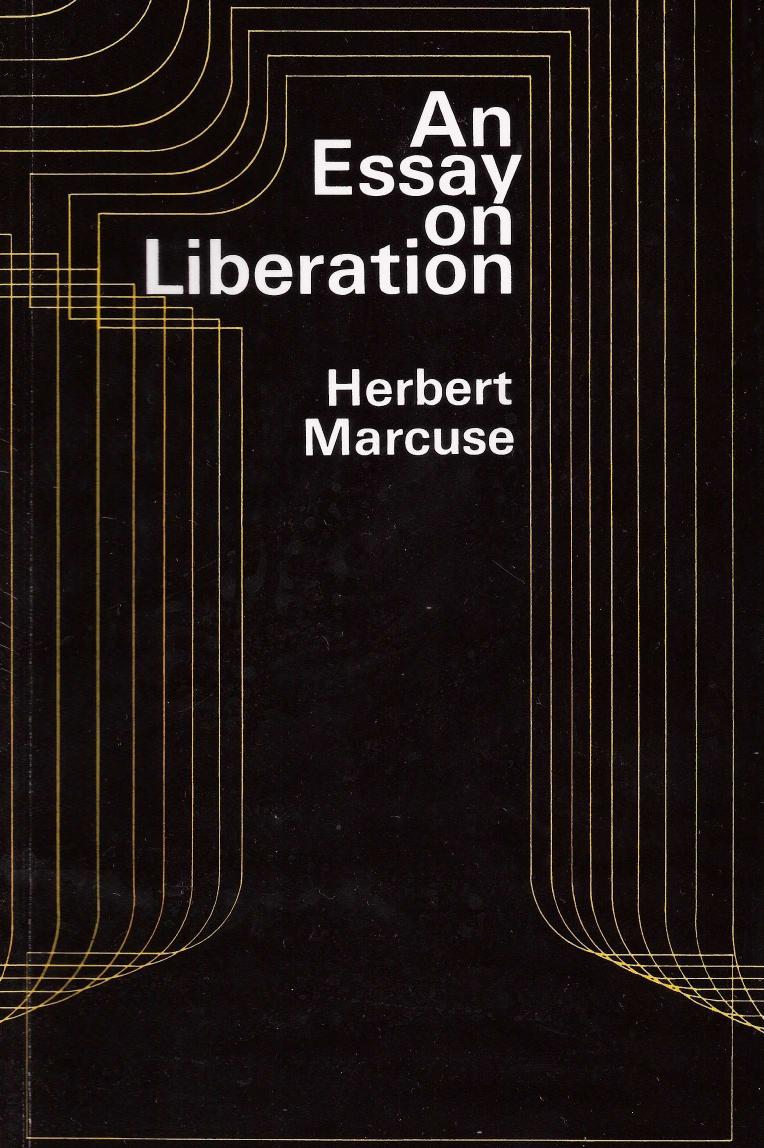
Author:Herbert Marcuse [Marcuse, Herbert]
Language: eng
Format: epub, pdf
ISBN: 978-0-8070-9687-1
Publisher: Beacon Press
Published: 1969-02-15T16:00:00+00:00
1 Hesiod, Theogony, Norman O. Brown, translator (Indianapolis: Bobbs-Merrill, 1953), p. 61.
2 Kant, Handschriftlicher Nachlass (Akademieausgabe), p. 622.
3 Nietzsche, Werke (Stuttgart: Alfred Kröner, 1921), vol. IX, p. 185.
4 Ibid., vol. XVI (1911), p. 230.
5 See esp. Nadja: “Voici des rencontres qu’explique mal le simple recours à la coïncidence, et qui, comme les rencontres de l’art, productrices de beauté, engendrent un émoi qui parait bien le signe d’une finalité objective, ou, du moins, la marque d’un sens dont nous ne sommes pas les seuls créateurs. Cette finalité, ce sens, supposent, dans le réel, un ordre qui soit leur source. Quel ordre, distinct de l’ordre de la causalité quotidienne, nous est donc ici signifié?” (Ferdinand Alquié, Philosophie du surrealisme. Paris: Flammarion, 1955, p. 141).
6 Here too, Kant’s aesthetic theory leads to the most advanced notions: the beautiful as “symbol” of the moral.
7 Benjamin Péret, Le Déshonneur des poètes (Paris: Pauvert, 1965), p. 65. Written in 1943.
8 The familiar “obscenities” in the language of the black and white radicals must be seen in this context of a methodical subversion of the linguistic universe of the Establishment. “Obscenities” are not officially co-opted and sanctioned by the spoken and written professions of the powers that be; their usage thus breaks the false ideological language and invalidates its definitions. But only in the political context of the Great Refusal do obscenities perform this function. If, for example, the highest executives of the nation or of the state are called, not President X or Governor Y but pig X or pig Y, and if what they say in campaign speeches is rendered as “oink, oink,” this offensive designation is used to deprive them of the aura of public servants or leaders who have only the common interest in mind. They are “redefined” as that which they really are in the eyes of the radicals. And if they are addressed as men who have perpetrated the unspeakable Oedipal crime, they are indicted on the counts of their own morality: the order they enforce with such violence was born in their sense of guilt. They slept with the mother without having slain the father, a deed less reprehensible but more contemptible than that of Oedipus. The methodical use of “obscenities” in the political language of the radicals is the elemental act of giving a new name to men and things, obliterating the false and hypocritical name which the renamed figures proudly bear in and for the system. And if the renaming invokes the sexual sphere, it falls in line with the great design of the desublimation of culture, which, to the radicals, is a vital aspect of liberation.
9 B. Eikhenbaum, in Theorie de la Littérature. Textes des Formalistes Russes, ed. Tzvetan Todorov (Paris: Editions du Seuil, 1965), p. 44.
10 V. Chklovski, in ibid., p. 83.
11 Ibid.
12 Franz Marc, “Der Blaue Reiter” (1914), in Manifeste Manifeste 1905–1933 (Dresden: Verlag der Kunst, 1956), p. 56.
13 Raoul Hausmann, “Die Kunst und die Zeit,” 1919 (in ibid., p. 186).
14 Ibid., pp. 188 ff.
15
Download
This site does not store any files on its server. We only index and link to content provided by other sites. Please contact the content providers to delete copyright contents if any and email us, we'll remove relevant links or contents immediately.
| Anarchism | Communism & Socialism |
| Conservatism & Liberalism | Democracy |
| Fascism | Libertarianism |
| Nationalism | Radicalism |
| Utopian |
The Secret History by Donna Tartt(19032)
The Social Justice Warrior Handbook by Lisa De Pasquale(12183)
Thirteen Reasons Why by Jay Asher(8885)
This Is How You Lose Her by Junot Diaz(6873)
Weapons of Math Destruction by Cathy O'Neil(6261)
Zero to One by Peter Thiel(5782)
Beartown by Fredrik Backman(5734)
The Myth of the Strong Leader by Archie Brown(5494)
The Fire Next Time by James Baldwin(5425)
How Democracies Die by Steven Levitsky & Daniel Ziblatt(5211)
Promise Me, Dad by Joe Biden(5141)
Stone's Rules by Roger Stone(5080)
A Higher Loyalty: Truth, Lies, and Leadership by James Comey(4946)
100 Deadly Skills by Clint Emerson(4913)
Rise and Kill First by Ronen Bergman(4776)
Secrecy World by Jake Bernstein(4738)
The David Icke Guide to the Global Conspiracy (and how to end it) by David Icke(4697)
The Farm by Tom Rob Smith(4500)
The Doomsday Machine by Daniel Ellsberg(4482)
